First foods
Starting first foods: a gentle guide
Signs of readiness, what to offer first and how to make the move to solids relaxed and enjoyable.
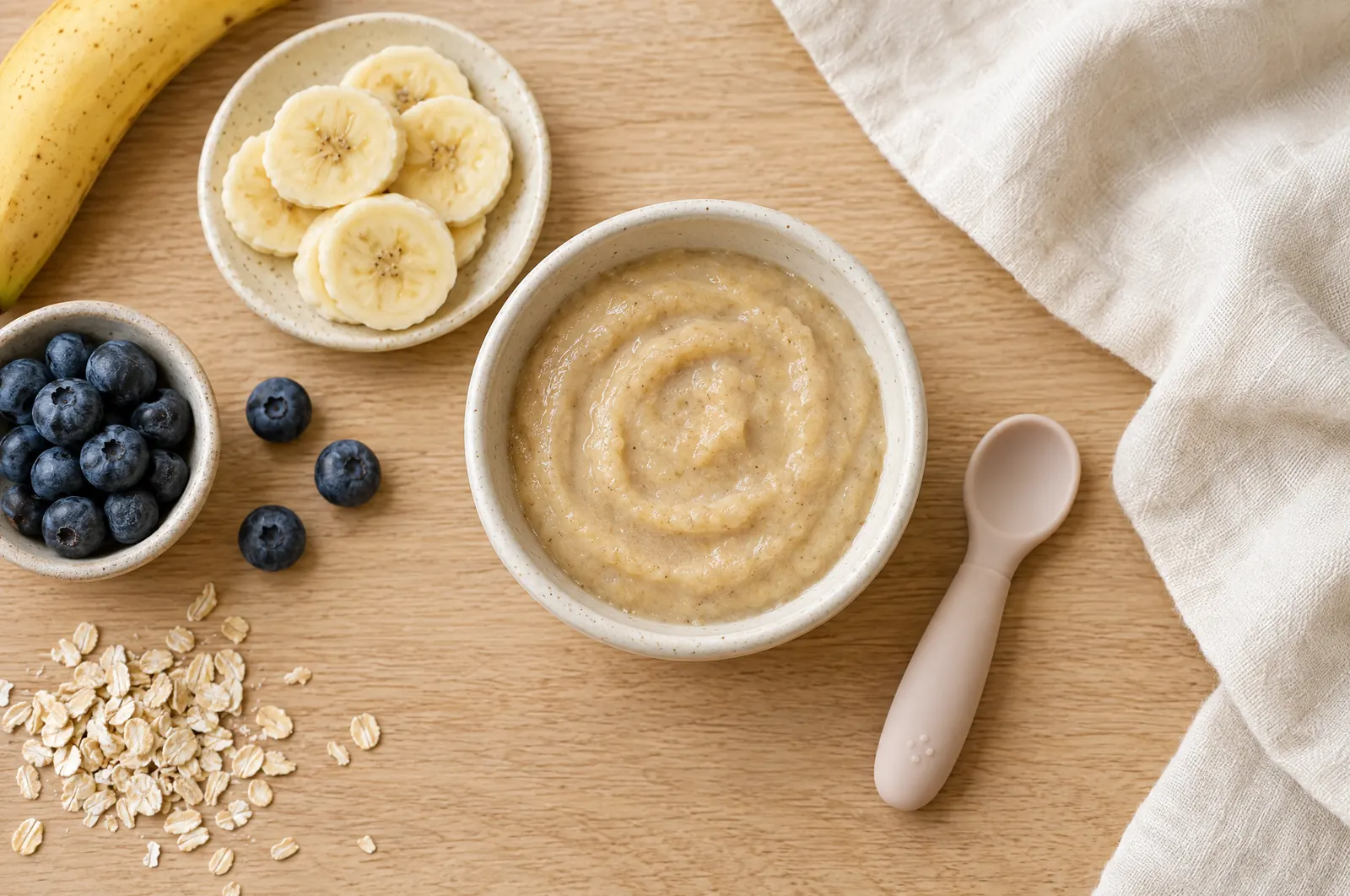
Around six months, babies need more energy and nutrients than milk alone can provide. This is when complementary foods begin — alongside continued breast milk or formula.
Signs your baby is ready
- Can sit up with support and hold their head steady.
- Shows interest in food and opens their mouth when food is offered.
- Can move food to the back of the mouth and swallow, rather than pushing it out.
First tastes
Start with small amounts of smooth or mashed foods: vegetables, fruits, and iron-rich foods such as lentils, meat or fortified cereals. Introduce one new food at a time and wait a few days before the next, so you can notice any reactions. Gradually move to thicker, lumpier textures and soft finger foods.
Good to know
- Don’t add salt or sugar to your baby’s food.
- Honey should not be given before 12 months.
- Always stay with your baby while they eat, and avoid whole nuts and other choking hazards.
- Offer water in an open or free-flow cup with meals.
Every baby moves at their own pace. If you have questions about allergies, growth or how much to offer, your healthcare professional can help.